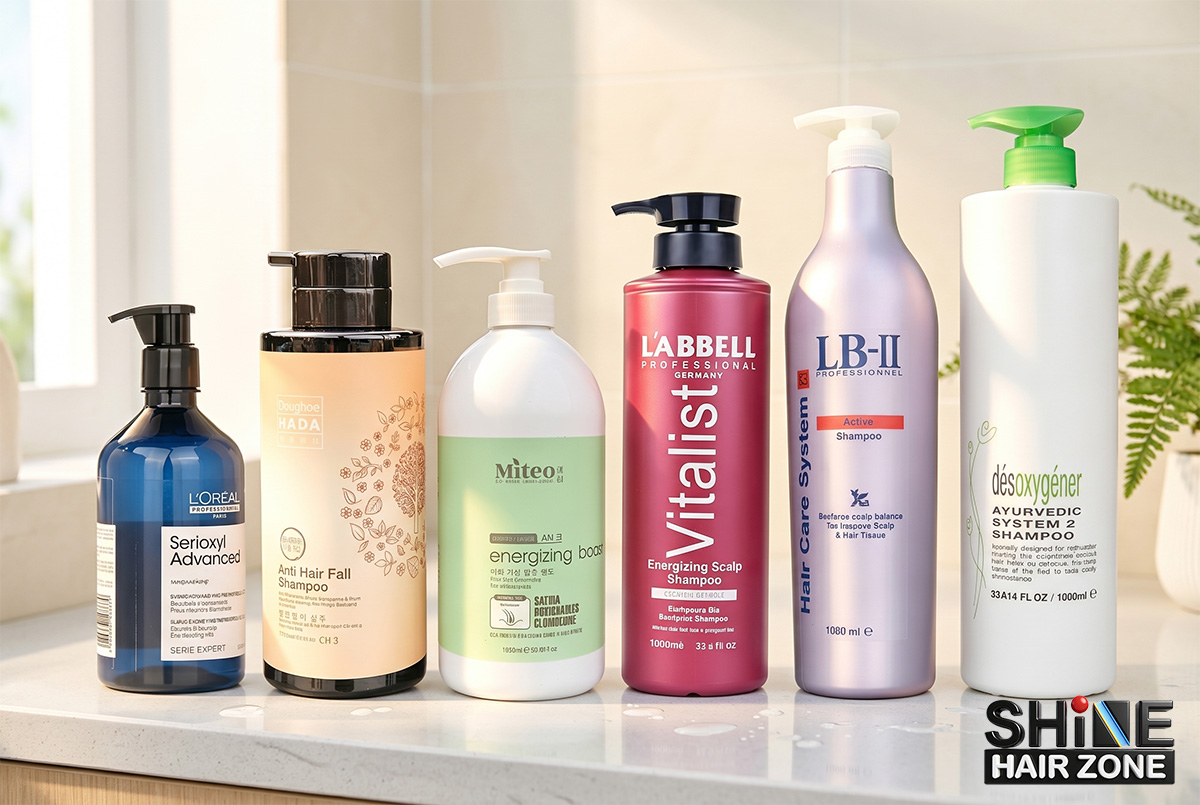
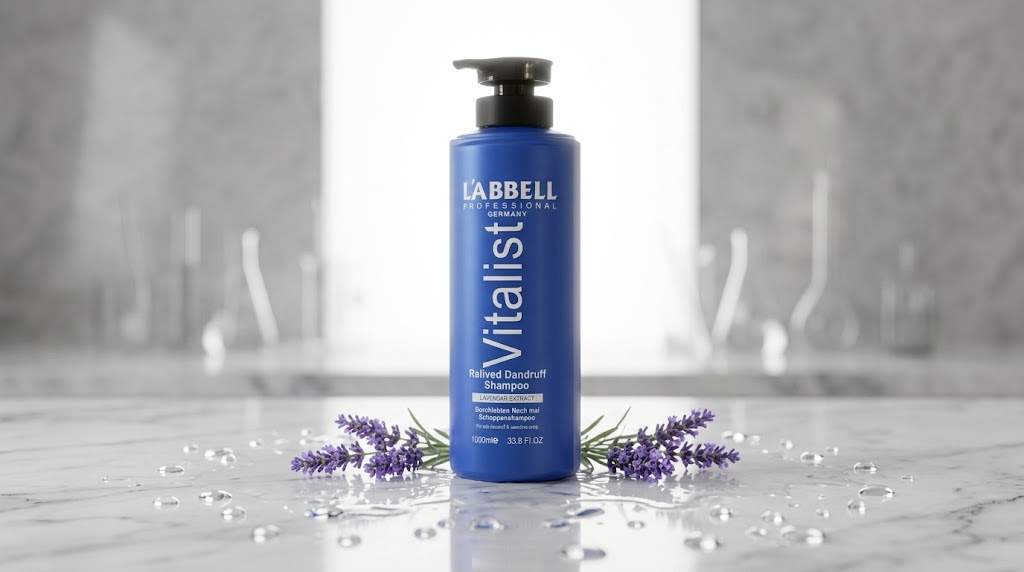
Dandruff that keeps coming back is usually not caused by poor washing, but by the resident scalp yeast Malassezia overgrowing when the scalp is oily, stuffy and its barrier is compromised. A single wash only removes the flakes of that day. Labbell Vitalist Relived Dandruff Shampoo (Lavandula Angustifolia flower extract + Climbazole) is used over 28 days: suppress for the first 2 weeks, then reduce the frequency — the key is to reduce, not to stop.
Why does dandruff keep coming back?
Because you are only washing away the flakes that fell today, not the reason they form. Malassezia already lives on the scalp; when the scalp is oily, stuffy and the barrier is damaged, it multiplies and the scalp’s renewal speeds up — so flakes come out in layers. Washing clean today and having it back three days later is expected.
Diagnose first: there are three types of dandruff
A | Dry type
Flakes are white, fine and loose, and fly off easily; more obvious in air-conditioned rooms. The scalp is often not oily, sometimes even tight. This is a lack of moisture and a weak barrier — you need gentle washing and moisturising, not a strong anti-dandruff wash every day.
B | Oily type
Flakes are more yellow, sticky and cling to the scalp; the scalp turns oily within 1-2 days and sometimes smells. It is oil plus yeast — you need to control both the yeast and the oil.
C | Yeast type (the truly recurring one)
Itching is the main character, the more you scratch the more there is, and the area behind the ears and along the hairline itches too. Switching several brands only holds it down for a few days. This needs anti-yeast treatment in a proper course, then reduced frequency for maintenance — that is the 28-day method below.
If the scalp is red, weeping, wounded or losing a lot of hair, do not rely on shampoo — see a skin doctor.
The technology: Relived Dandruff Shampoo (blue bottle · Lavender)
The key ingredient is Lavandula Angustifolia flower extract, the traditional soothing and antibacterial route. The anti-yeast agent in the formula is Climbazole, together with Menthol (a cooling sensation that eases itching immediately), Panthenol (B5) and Glycerin. The thinking is clear: control the yeast while calming the itch. When you scratch less, your scalp takes less damage.
The ritual: the 28-day frequency-reduction method
Weeks 1-2 | Suppression phase
- Relived Dandruff Shampoo: 3 times a week
- On other days: Fortify Moisture Shampoo (gentle moisturising, letting the scalp barrier breathe)
- How to wash: massage for 60 seconds then rinse, no need to soak it long
- Water temperature ≤38°C; do not scratch with your nails
- After washing, always dry the scalp (damp equals a party for yeast)
Weeks 3-4 | Reduction phase
- Relived: 1-2 times a week
- Use a gentle shampoo as usual on the other days
After that | Maintenance phase
- Once a week, or wash once immediately whenever you feel it coming back
The biggest mistake: stopping completely once it improves. When the yeast returns, you have to start again from week one. The correct approach is to reduce the frequency, not to stop.
Timeline
- Days 3-5: the itch starts to come down (Menthol gives an immediate sensation, but lasting relief is the real sign)
- Days 10-14: flakes on the shoulders clearly drop
- Day 28: no rebound after reducing the frequency — that is when you pass
Salon tip (PRO TIP)
Many people get the order wrong: shampoo, then conditioner, then scratch the scalp. The right way is to wash the scalp properly with shampoo first, and apply conditioner only from mid-length to the ends, 5 cm away from the scalp. Conditioner touching the scalp is the most common reason for still itching after washing.
FAQ
Is dandruff a sign of a scalp that is too dry or too oily?
Both are possible and they are treated in opposite ways. The dry type is a weak barrier and lack of moisture — gentle washing with moisturising suits it. The oily type is oil together with yeast — it needs yeast control and oil control. Identify the type before choosing a shampoo.
Can anti-dandruff shampoo be used every day?
Not advisable. Anti-yeast ingredients work by suppression, and long-term daily use can weaken the scalp barrier. The usual approach: 3 times a week for the first 2 weeks, reduce to 1-2 times in weeks 3-4, then once a week for maintenance — reduce, do not stop.
What is the difference between Climbazole and piroctone olamine?
Both are anti-yeast ingredients used on the scalp and often appear in anti-dandruff formulas; both work by suppressing the Malassezia that causes dandruff. Labelling differs between products: the Labbell Vitalist Relived Dandruff Shampoo bottle states Climbazole, while the English product description also mentions piroctone olamine — follow the INCI labelling on the bottle.
Why does dandruff still come back after switching anti-dandruff shampoo?
Usually two reasons: the washing method is wrong (water too hot, scratching with nails, conditioner touching the scalp, scalp not dried after washing), or you stopped completely as soon as it improved. The right approach is to keep it going at a reduced frequency.
Can I scratch when my scalp itches?
Do not scratch. Scratching creates tiny wounds, weakens the scalp barrier further, and makes both the flakes and the itch worse. Use a product with Menthol for immediate relief, and deal with the cause through yeast control.
How long does it take to show results?
Most people notice reduced itching first, usually on days 3-5; visibly fewer flakes normally comes on days 10-14. Day 28, with no rebound after reducing the frequency, is when you pass.
Can coloured or bleached hair use anti-dandruff shampoo?
Yes, but mind the frequency and the pairing: use the anti-dandruff shampoo in a course, alternating with a moisturising shampoo such as Fortify Moisture (which contains Yogurt Extract) so the hair does not dry out. Scalp problems and hair strand damage are two separate things.
Summary
Recurring dandruff is not about being unclean — it is Malassezia plus the wrong washing habits, and Labbell Vitalist Relived Dandruff Shampoo (Lavender + Climbazole) is used over 28 days by reducing the frequency rather than stopping. WhatsApp us for a scalp consultation, or view the Labbell Vitalist Relived Dandruff Shampoo 1000ml and 330ml product pages.